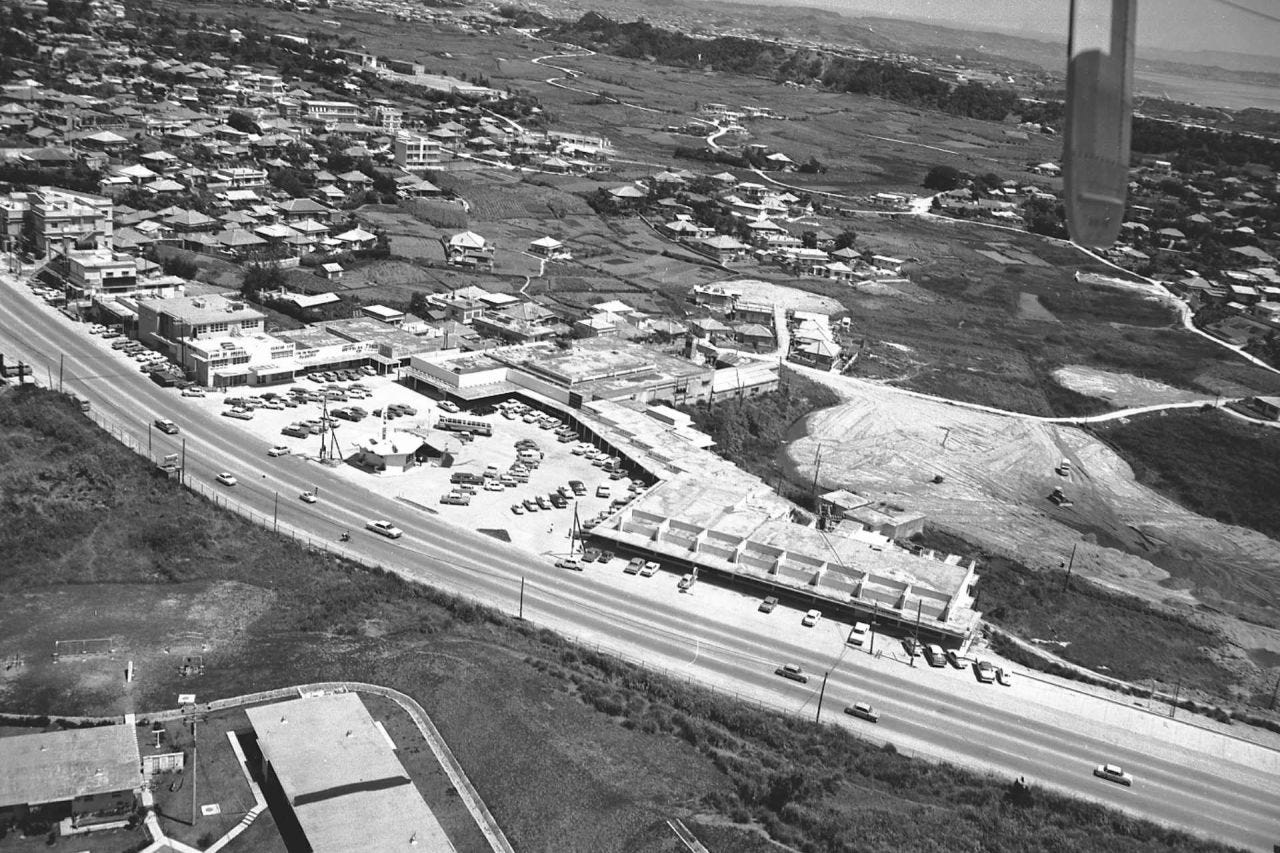
My mother's father built the first shopping center in Asia. His children lost almost all of it.
There is a saying in family business: shirtsleeves to shirtsleeves in three generations. The first generation builds it. The second holds it. The third loses it. My mom's family has lived it.
My maternal grandfather was an entrepreneur in Okinawa after World War II. He built military barracks, restaurants, a bottling plant, the early bones of what became the island's tourism economy. They got rich. Then the second generation lost most of it.
I did not grow up with an abstraction about generational wealth. I grew up watching the specific, quiet ways money disappears when the people who built it are gone and the people who inherited it did not build the same relationship with it.
That awareness has been one of the most useful things in my life.
Last year, I did something I want to talk about more. I sat my grandmother down with a biographer (thank you Kasia Flanagan PhD!) for three days and had her tell the whole story. How she and my grandfather lived through World War II in Okinawa. How they built the business. How they got rich. How they lost the money. All of it, unfiltered, in her words, from the beginning.
It is now a sixty-page book that lives in our family. Something Eleanor will be able to read when she is old enough to understand it. I did it because I believe the stories are as important as the assets. You cannot pass down the discipline that built something if you erase the story of what happened when that discipline was lost. The sixty pages are not a warning. They are a gift. They are the most honest inheritance I can think of.
The "shirtsleeves to shirtsleeves" pattern does not happen because families are careless. It happens because each generation has to rediscover the hunger and awareness that built the thing. You cannot inherit that automatically. You have to work to stay connected to it. Knowing what is possible to lose is part of what keeps me building.
Does your family talk openly about what was lost, or only about what was built?